
24/7 Emergency Water Damage Restoration in Pensacola, FL
When water floods a floor or soaks a ceiling, every hour counts. Water moves into carpet, drywall, cabinets, and the spaces behind walls faster than most people expect. Pensacola Restoration Pro helps homeowners, renters, and businesses in Pensacola, Florida respond to sudden water damage, and we are available 24/7 for emergency calls.
Tell us what happened and we will talk through the next steps for your property. Estimates are free.
- 24/7 Emergency Calls
- Free Estimates
- Licensed and Insured
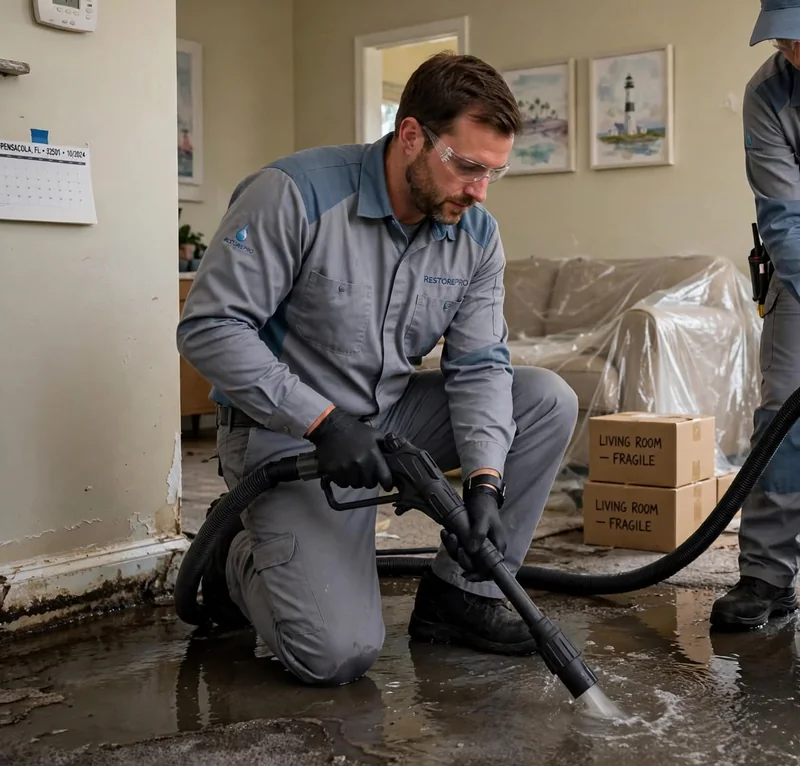
Common Water Emergencies in Pensacola
Water emergencies in Pensacola often come from storms, aging plumbing, or both. Knowing the likely source helps you decide what to do first.
Burst Pipes, Appliance Failures, and Plumbing Leaks
A burst pipe, a failed supply line, an overflowing toilet, or a broken water heater can release a large amount of water in minutes. A washing machine or dishwasher hose can fail too. Water from these sources often spreads through flooring and into walls before anyone notices.
Storm Water, Roof Leaks, and Flooding
Heavy rain, tropical storms, and hurricane season can push water into a property through the roof, windows, doors, or the ground. A roof that gives way in a storm can soak ceilings, insulation, and rooms below it. Floodwater from outside needs extra caution, because it may carry dirt and contaminants.
Signs That Water Damage Needs Urgent Attention
Look for these signs:
- Standing water on floors
- Wet or sagging ceilings
- Water running from light fixtures or walls
- Soaked carpet or warped flooring
- Swollen baseboards or cabinets
- A strong musty smell
- The sound of dripping or running water inside walls
What to Do Right Away After a Water Emergency
Your first steps should protect people, then the property. Stay calm and work through them in order.
Make the Area Safe
Water and electricity are a dangerous mix. If water is near outlets, wiring, or appliances, stay out of the room. If it is safe to reach, turn off power to the affected area at the breaker panel. Do not use electrical devices while standing in water. If anyone is in danger, call 911.
Stop the Source of the Water
If a pipe has burst or an appliance is leaking, close the main water shutoff valve, or the valve for that fixture, if you can reach it safely. A roof leak may need a temporary cover until a roofer can repair it. Stopping the source keeps the damage from growing while help is on the way.
Document the Damage for Your Records
Take photos and video of the water, the damaged areas, and your belongings before anything is moved. Write down what was affected. These records help when you talk to your insurance company. They do not guarantee coverage, but they help you describe the loss clearly. We offer insurance claim assistance, so ask us what records help most.
Move Belongings and Avoid Common Mistakes
Lift small items, papers, and electronics out of the water if it is safe. Avoid these mistakes:
- Do not walk through floodwater or sewage.
- Do not use a household vacuum on wet floors.
- Do not turn on ceiling fixtures under a wet ceiling.
- Do not assume dry-looking surfaces are dry.
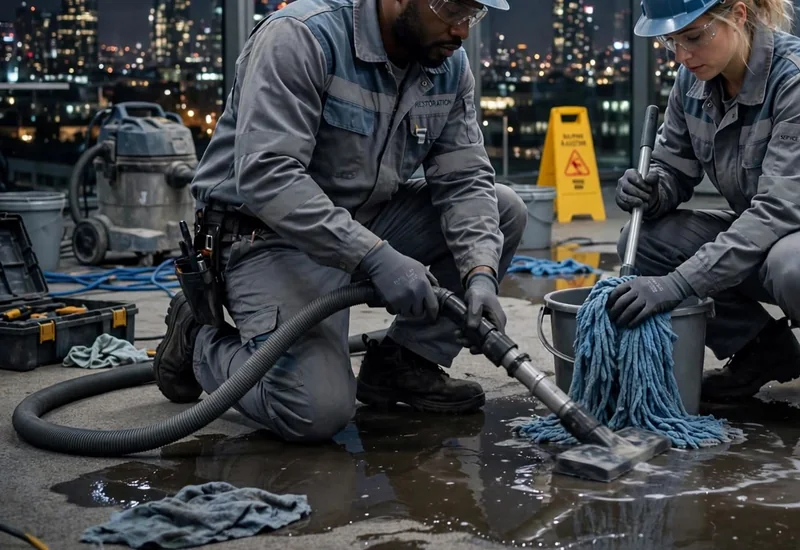
How Emergency Water Damage Restoration Works
An emergency response is organized, and each step helps the next one. The exact work depends on your property, the source of the water, and how long it has been there.
Assessing the Source, Water Type, and Affected Areas
We start by finding where the water came from and how far it traveled. Industry guidance such as the ANSI/IICRC S500 standard groups water into three categories, from clean supply water (Category 1) to heavily contaminated water such as sewage or floodwater (Category 3). The category affects how the cleanup is handled. Moisture meters help us find water that is not visible on the surface.
Removing Water and Starting the Drying Process
Standing water is removed first so the building can begin to dry. Our water extraction and removal page explains this step in more detail. Once the water is out, the wet materials are dried with air movers and dehumidifiers. Our structural drying and dehumidification page explains how moisture is monitored until materials are dry.
Deciding What Can Be Saved and What Cannot
Some materials can be dried and kept. Others, such as soaked carpet pad, saturated insulation, or drywall exposed to contaminated water, may need to be removed. We explain what we see so you can decide with clear information. Restoration timelines vary by property, so we do not promise a fixed completion date.
Why Acting Quickly Matters After Water Damage
Time changes the problem. Water that is dealt with early usually causes less damage than water left sitting.
Water Spreads Into Walls, Floors, and Ceilings
Water follows gravity and gaps. It can move under flooring, into wall cavities, and across ceilings. A small visible puddle can mean a much larger wet area behind the surface.
Moisture Can Lead to Mold in Pensacola's Humid Climate
The U.S. Environmental Protection Agency advises drying wet materials within 24 to 48 hours to help prevent mold growth. Pensacola's warm, humid air makes that window important. If mold has already appeared, see our mold remediation page.
Emergency Water Damage Restoration Near Me in Pensacola, FL
If you need emergency water damage help near you, our office is at 238 W Intendencia St, Pensacola, FL 32502. We serve properties across Pensacola, including ZIP codes 32501, 32502, 32503, 32504, and 32505.
Older homes in North Hill, East Hill, and Seville Square often have plaster walls, hardwood floors, and older plumbing, which can hold moisture longer. Waterfront areas near Pensacola Bay face storm-driven water. When you call, give us your street address or neighborhood so we can confirm whether we can help at your location.
Water Emergencies We Respond To
Different emergencies have different needs. Each of these has its own page: burst pipe water damage, water heater leaks, roof leaks, flood and storm damage, sewage backups, basement and low-area water, and commercial water damage. You can open any of them from the Services menu. For pipe breaks in particular, read about burst pipe water damage.
Residential and Commercial Water Emergencies
For Homes, Apartments, and Rentals
Water damage can reach kitchens, bathrooms, bedrooms, and garages. If you rent, tell your landlord or property manager right away and keep copies of your photos and messages.
For Businesses and Property Managers
A water emergency in an office, shop, or rental building can interrupt work and damage equipment, inventory, and shared walls. Contact us early so the affected areas can be assessed.
Related Work That May Need Another Professional
Restoration handles the water and the damaged materials. After drying, we can also handle repairs and rebuilding, such as drywall, insulation, and flooring. We do not repair the cause itself. A broken pipe may need a licensed plumber, a roof leak a roofer, and electrical hazards a qualified electrician. We will tell you when another professional is needed, so the source is fixed and the damage does not return.
Contact Pensacola Restoration Pro About Your Water Emergency
If water has entered your property, do not wait to find out how far it spread. Reach out and describe what you see.
Reach Us Any Hour
What to Tell Us When You Contact Us
Share your address or neighborhood, where the water came from, which rooms are wet, and whether water is still coming in. Mention if the water might be sewage or floodwater. Have general questions first? Our FAQ page answers many of them.