
Water Heater Leak Cleanup in Pensacola, FL
A leaking water heater can release a lot of water, and often does it slowly and out of sight. The water spreads into closets, garages, attics, and the floors around it before the damage shows. Pensacola Restoration Pro helps homeowners, renters, and businesses in Pensacola, Florida with water damage cleanup and drying after a water heater leaks.
We are available 24/7 for emergency calls, and estimates are free. Tell us what happened. We will talk through the next steps for your property.
- 24/7 Emergency Calls
- Free Estimates
- Licensed and Insured
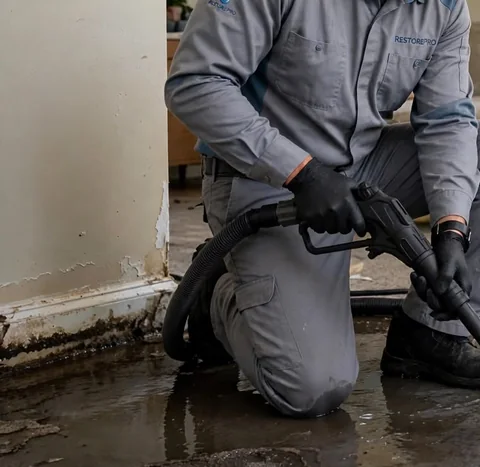
Why Water Heaters Leak
A water heater leak starts with a worn part, a loose connection, or a tank that has reached the end of its life. Knowing the cause tells you whether you have a small problem or a failing tank.
Tank Corrosion and Age
Over the years, rust forms inside and outside a tank. Sediment builds up at the bottom, and the protective parts that slow corrosion wear out. A tank that corrodes through can leak from the bottom or sides. When the tank itself leaks, the unit usually needs replacement.
Loose Connections, Valves, and Fittings
Not every leak comes from the tank. Water can drip from the supply and hot-water pipes, the drain valve, or the temperature and pressure relief valve. These leaks are often smaller and may be repaired without replacing the heater.
High Pressure and Sediment Buildup
Water pressure that is too high can strain a tank and its valves. Sediment can overheat the bottom of the tank and weaken it. Either problem can lead to leaks or a sudden failure.
Signs of a Water Heater Leak
Water heater leaks can start small. Look for these signs.
Visible Signs Around the Heater
- Water pooling around the base
- Rust streaks or corrosion on the tank or pipes
- Drips from valves or pipe fittings
- A wet floor, wall, or cabinet near the unit
Hidden Signs Elsewhere in the Building
- Stains or sagging on a ceiling below an attic heater
- Warped flooring near a utility closet
- A musty smell in a garage or laundry room
- Higher water bills with no other explanation
- Lukewarm or no hot water
If the unit is in an attic, a leak can soak insulation and ceiling drywall before you see it.
What to Do When a Water Heater Leaks
Your first steps should reduce risk and limit the water. Keep them in order.
Turn Off the Power or Gas
For an electric heater, turn off its breaker only if you can reach the panel without standing in water. For a gas heater, turn the gas control to off. If you smell gas, leave the building immediately and call 911 and your gas utility. Do not touch a wet electric heater.
Shut Off the Cold Water Supply
Close the cold water valve above the heater. This stops more water from entering the tank. If you cannot reach it, close the main water shutoff for the building. Be careful: leaking water can be very hot and can scald.
Protect the Area and Document the Damage
Move belongings away from the water if it is safe. Take photos and video of the heater, the leak, and the damage before cleanup. Keep copies for your insurance claim. Documentation does not guarantee coverage. Policies often treat sudden leaks differently from slow leaks caused by wear, so check your policy.
Call a Plumber and a Restoration Team
A licensed plumber is needed to repair or replace the heater. A restoration team is needed for the water damage that follows. These are two separate jobs. Call us once the water is off so cleanup and drying can begin. For the first steps in any water emergency, see Emergency Water Damage Restoration.
How We Handle Water Heater Leak Damage
The work follows a clear order. The scope depends on how much water escaped, how long it leaked, and what it touched.
Assessing Where the Water Went
We trace the water from the heater. It often spreads under walls, into cabinets, and through flooring. Moisture meters help find water behind surfaces that look dry. Water from a heater usually starts clean, but it can become contaminated if it sits or reaches dirty areas.
Removing Water and Drying Materials
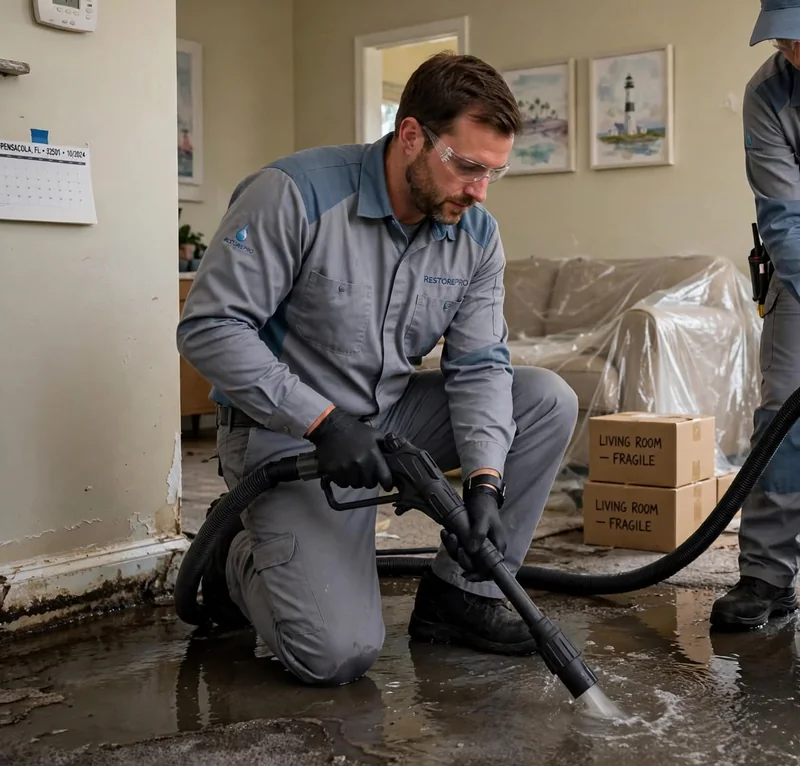
Standing water is removed first. See Water Extraction & Removal. Then air movers and dehumidifiers dry the affected materials, and moisture readings track progress. See Structural Drying & Dehumidification.
Deciding What Can Be Saved
Some materials can be dried and kept, such as concrete and many hard floors. Others, such as soaked insulation, drywall that stayed wet, or carpet pad, may need to be removed. Industry guidance such as the ANSI/IICRC S500 standard helps guide these decisions. We explain what we recommend and why.
Preventing Mold After a Slow Leak
A slow leak can leave materials wet for weeks. Pensacola's humid climate adds to the risk. The U.S. Environmental Protection Agency advises drying wet materials within 24 to 48 hours to help prevent mold growth, and slow leaks often miss that window. If mold has already appeared, see Mold Remediation. We cannot promise a fixed timeline, because every loss is different.
Where Water Heater Leaks Cause the Most Damage
The location of the heater shapes the damage.
Garages, Utility Closets, and Laundry Rooms
These spaces often have concrete or tile floors that handle water well. Walls, cabinets, and stored items do not. Water can also run under a wall into a living space.
Attics and Upper Floors
Attic heaters can bring water through ceilings, down walls, and into the rooms below. Insulation holds the water and can make the damage worse. Stay out of rooms with a sagging ceiling.
Slab Homes and Crawl Spaces
Pensacola has many slab and raised homes. Water can seep into subfloors, under baseboards, and into crawl spaces where it is easy to miss. In older homes in neighborhoods such as North Hill and East Hill, hardwood floors can cup or buckle if water gets underneath.
Water Heater Leak Cleanup Near Me in Pensacola, FL
If you need water heater leak cleanup near you, our office is at 238 W Intendencia St, Pensacola, FL 32502. We serve properties across Pensacola, including ZIP codes 32501, 32502, 32503, 32504, and 32505.
When you call, tell us your address or neighborhood, where the heater is, how long it has leaked, and which rooms are wet. We will confirm whether we can help at your location.
Residential and Commercial Water Heater Leaks
For Homes and Rentals
A heater leak can take out hot water and damage the rooms around it. If you rent, tell your landlord or property manager right away and keep copies of your photos and messages.
For Businesses and Property Managers
Commercial heaters in restaurants, salons, and rental buildings can leak into storage and shared walls. Contact us early so the affected areas can be assessed. See Commercial Water Damage Restoration.
Related Work That May Need Another Professional
Restoration deals with the water and the damaged materials. After drying, we can also handle repairs and rebuilding, such as drywall, insulation, and flooring. We do not repair or replace the water heater. A licensed plumber is needed for that. Gas appliances may also need your gas utility. Electrical systems that got wet should be checked by a qualified electrician. We will tell you when another professional is needed so the cause is fixed and the damage does not return.
Contact Pensacola Restoration Pro About a Water Heater Leak
If your water heater has leaked, shut off the power or gas and the water, then call us. The sooner drying begins, the more you can usually save.
Reach Us Any Hour
What to Tell Us When You Call
Share your address or neighborhood, where the heater is, when the leak started, whether the supply is off, and which rooms and floors are affected. Mention if the heater is in an attic. Have general questions first? Our FAQ page answers many of them.